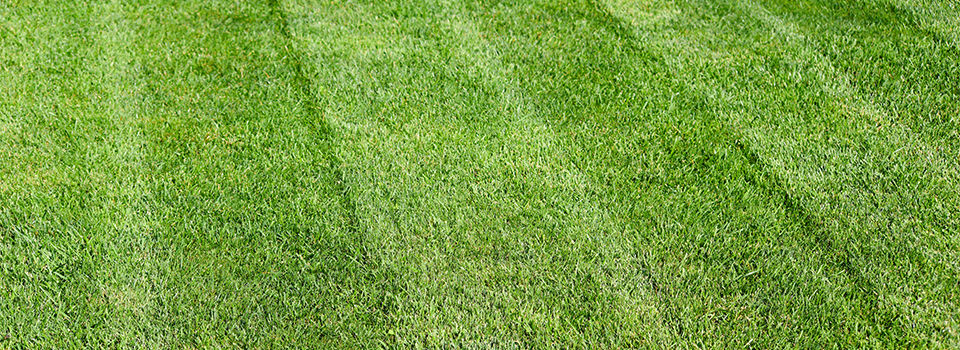
Step 1: Mow Right
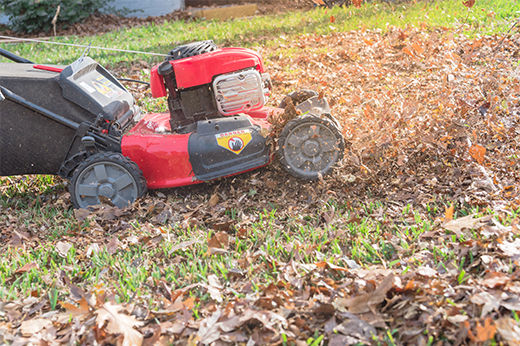
Mowing your yard correctly is the first step to a great-looking lawn. Even if you feel you’re handy with a lawn mower, it doesn’t hurt to brush up on your skills. Always set your mower’s blade to the correct height for your type of grass. If you’re not sure, set the blade so that you don’t cut off more than 1/3 of the grass blades’ height. Grass that is too short makes your lawn susceptible to crabgrass and damage from the sun. Cutting the grass at this height also makes it easier to bend the grass over to create the stripe effect.
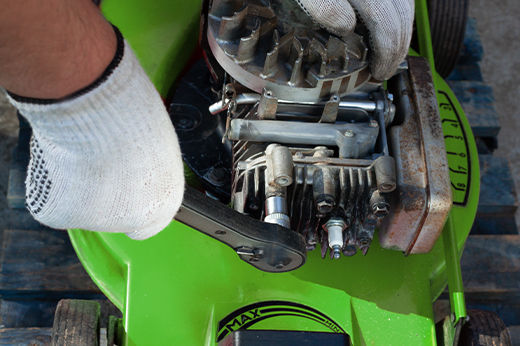
Routinely use a scraper to remove any built-up dirt and grass clippings on the underside of the mower. Rinse the underside with a garden hose. Also, check the mower blade. If the blade needs sharpening, use a heavy file to remove dull edges. You will probably only have to sharpen the blade once a year, either at the beginning or end of the mowing season.
Safety Alert!
Pick up debris that could be thrown from under the mower and cause damage or injury, such as rocks, sticks, trash, etc.
You want to push your mower in parallel rows. Using a sidewalk, driveway or other non-grass surface as a guide and a starting point, begin mowing parallel to the surface and work your way across the lawn, turning at each end and mowing alongside the row you just made.
Helpful Tip
To ensure you don’t miss any grass, keep your mower’s wheel just inside the previously cut row.
Use a grass bag or catcher with your mower. This leaves your lawn looking clean and neat. Remember not to let the bag become too full. When this happens, grass begins to clump and these clumps fall out from underneath the mower and leave your lawn looking messy. Empty the grass catcher when you notice that it’s almost full.
Helpful Tips
Clumps and grass clippings can be spread across the yard with a general purpose rake so that your lawn isn’t messy looking. It is also good for the grass, as the clippings act like mulch.
Generally speaking, you should cut your grass once a week for appearance and good grass health.
Step 2: Know Your Grass
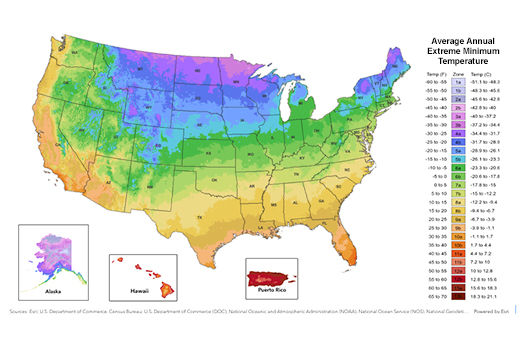
The striping effect is created by light reflecting off of grass blades. Stripes look dark when they are bent towards you, while lighter stripes are created by the effect of blades bent in the opposite direction. The degree with which your lawn can be striped to look like a baseball field depends on whether, and how much, your grass blades can bend and remain bent. Cool-season grasses work best to accentuate the striped effect. These include fescues, ryes, bentgrass and bluegrass to name just a handful. Warm season grasses like Bermuda, carpetgrass, St. Augustine grass or zoysia don’t stay bent over as long because the blades are usually stiffer and tougher.
Helpful Tip
Water the grass after mowing to make stripes stand out even more.
Step 3: Choose a Pattern
Before cutting and/or rolling, chose a pattern that works best for you and your yard. Creating parallel stripes is simple and probably the most common striping effect. Other potential patterns include gently curving stripes that create a wave effect, which is good for matching with curved hardscapes. You can also cut/roll in circles around circular landscaping features for a dramatic effect. A more complex pattern is a checkered or chessboard pattern common on some baseball fields.