Step 1: Prepare for the Project
Work in a well-ventilated area such as your open garage or on an outdoor deck or patio. Make sure your work area is dry and dust-free. Use painter’s tape to secure a large drop cloth or tarp to the ground or floor to protect it against spills from chemical strippers and to make cleanup easier. Remove all furniture hardware, drawers, mirrors, and doors with a screwdriver or another appropriate tool.
If you are refinishing trim or other semi-permanent pieces, decide whether it will be best to leave them in place to refinish or remove them to work on in your workshop or garage area. You will have more control over the process if you remove them to work on them. If you leave them in place, be sure to protect the floor and other surfaces with a drop cloth that is put securely in place so that dust, debris, and chemical stripping agents don’t damage floors or other areas that you don’t want marred. If you’re refinishing banisters or other permanent pieces, open doors and windows to ventilate the room.
Helpful Tip
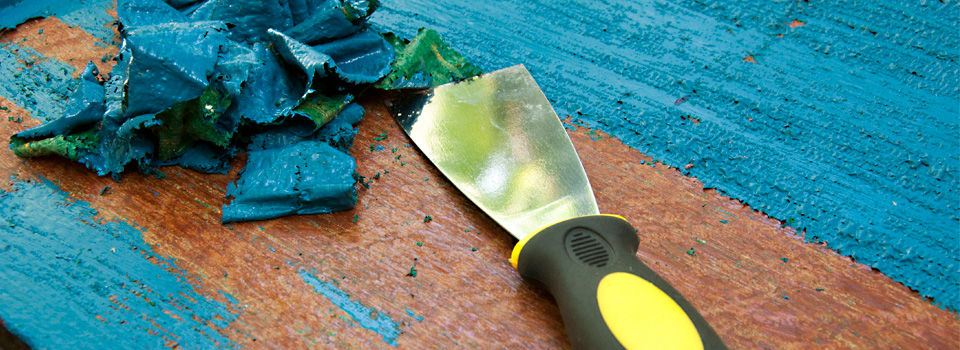
For painted surfaces, scrape paint from a small area of the wood with a paint scraper to see how many layers of paint are already on the piece. This will give you an idea of the job ahead and better prepare you for how you will strip the piece down to bare wood.
Safety Alert!
If you’re removing paint from old wood, the paint may contain lead. Lead is toxic, and scraping, sanding, or removing old paint may release lead dust into the air. Children and women who are pregnant should stay away from the work area during this process. When you’re working with lead dust, wear a NIOSH-approved respirator and clean all debris carefully with a HEPA filter-outfitted vacuum and a wet mop. Before you start, learn the proper methods to protect yourself by contacting the National Lead Hotline at 1-800-424-LEAD or visiting www.epa.gov/lead.
Clean wood with trisodium phosphate (TSP) and follow all manufacturer instructions. Use a sponge or spray bottle to apply the TSP solution and then wash all exterior surfaces. Let them dry completely.
Safety Alert!
Use TSP as directed by the manufacturer. TSP can corrode metal and damage finished wood. Be sure to wear protective clothing, eyewear, and rubber gloves.
Step 2: Strip Away Old Finish
You can remove stains, loose paint, and varnish with a combination of sanding, scraping, and chemical strippers. To remove finishes quickly from larger areas, use a random-orbit sander. Take care not to damage the piece by sanding too deeply. Use a fine-grit or medium-grit sandpaper. Sand carefully by hand around decoratively curved areas or other ornate features. For irregular areas, hand-sand with a rubber or foam sanding block.
Chemical strippers need to be mixed with water, so check the manufacturer’s directions before use. Use a medium-sized paintbrush to apply the solution evenly across the surface. Brush it on thickly with a single pass of the brush — don’t brush it out the same way you would with paint. Let it soak in 20 to 30 minutes or until the finish has bubbled up before trying to remove it. Use a plastic paint scraper or a smooth, round-edged putty knife to begin scraping away the paint or stain residue. The surface may be soft, so be careful not to damage it with the scraper. Keep a rag handy as well to wipe away residue. This can also help remove paint and stain, especially in hard-to-reach cracks and crevices. You can also try an old toothbrush, cotton swabs, or steel wool for nooks and crannies. Allow the piece to dry completely.
Safety Alerts!
Always follow the manufacturer’s instructions and wear rubber gloves and protective goggles when using strong chemicals.
Never strip furniture near an open flame. Chemical strippers are highly flammable.
Heat guns can be used as a supplement to other methods to remove particularly stubborn finishes. They are a quick and effective method for removing finish from flat surfaces, especially. Read the heat gun instructions carefully before use. To use the gun, heat a small area until the finish bubbles up, and then scrape away the paint residue.
Helpful Tip
Heat guns can leave residue in the pores of the wood or in detailed areas and crevices that can’t be scraped away. If you notice this is happening, stop and apply the chemical stripper to finish the job.
Safety Alert!
Always wear heavy gloves when using a heat gun because it can get very hot.
Step 3: Keep Sanding
After using a scraper and chemicals, you may find the surface will have a raised grain or feel or look” fuzzy.” If so, smooth the surface with fine-grit sandpaper. The more thorough you are during the stripping process, the less you’ll need to sand. Continue sanding with medium/low-grit sandpaper to clean off any remaining finish and smooth out any imperfections in the wood that you may have missed. Then smooth the whole piece down with medium-grit sandpaper. Be sure to sand along the grain of the wood. Do this carefully, as any swirl marks caused by sanding will stand out when you stain. Wipe away sanding dust with a damp rag.
Good job! Your wood surfaces should now look how nature intended. Now get started refinishing in the method of your choice.
Project Shopping List
Here’s what you’ll need to complete this project successfully.
- Painter’s tape
- Drop cloth
- Tarp
- Chemical paint stripper
- Screwdriver
- Paint scraper
- NIOSH-approved ventilator
- HEPA filter-outfitted vacuum
- Wet mop
- Trisodium phosphate (TSP)
- Sponge
- Spray bottle
- Protective clothing
- Safety goggles
- Rubber gloves
- Random-orbit sander
- Fine-grit sandpaper
- Medium-low grit sandpaper
- Rubber or foam sanding block
- Medium-sized paintbrush
- Plastic paint scraper
- Round-edged putty knife
- Rag
- Old toothbrush
- Cotton swabs
- Steel wool
- Heat gun
- Heavy gloves