Step 1: Inspect Flaking Paint Trouble Spots
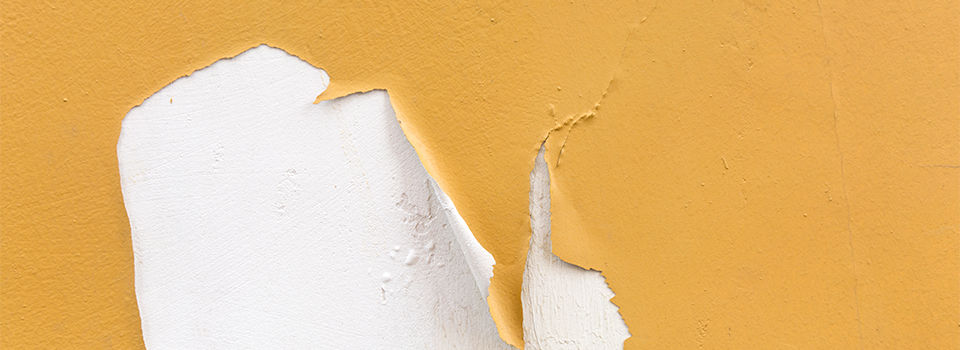
Peeling paint occurs when moisture collects under a painted surface. Moisture enters wood surfaces from the unpainted side, gets absorbed and then dries. This repeated swelling and shrinking of wood causes the paint to pull away from the surface, which results in cracking and peeling paint. Locate sources of moisture by checking areas for leakage from gutters or eaves of the house. If paint is flaking on exterior walls near a bathroom or the kitchen, pipes may be sweating or leaking, or excess heat may be causing condensation that eventually leads to peeling paint.
Use a ladder to get a close look at areas outside where visibility is poor, or consider using binoculars to examine your siding’s condition from the ground. Either of these will help you identify potential problems.
SAFETY ALERT
Familiarize yourself with basic ladder safety procedures. Be wary of bee and wasp nests, especially when you are on a ladder. Be very careful around overhead electrical wires, especially when moving ladders around or painting near the locations of service lines attached to the house.
Step 2: Remove Loose Paint
Remove all peeling and flaking paint using a paint scraper. Cover the ground with drop cloths to catch paint chips, dust and debris. Next, sand the surface. You can rent or buy a disc sander with 60-, 80- and 120-grit sanding discs. For very limited areas, use a random-orbit sander, hand sander or disc sander drill attachment. Begin sanding with a coarse abrasive and finish with a fine one. Pay particular attention to smoothing the edges between painted and scraped areas. This is called feathering. Painting will accentuate, not hide, any ridges and edges you leave.
SAFETY ALERTS
- Scraping, sanding and removing old paint may release lead dust, which is toxic. Exposure to lead dust can cause serious illness, especially in children. Pregnant women should also avoid exposure. Before you start, find out how to protect yourself by contacting the National Lead Hotline at 1-800-424-LEAD or go to www.epa.gov/lead. Wear a NIOSH-approved respirator to control lead exposure. Cleanup carefully with a HEPA vacuum and a wet mop or sponge.
- Always wear safety goggles and a tight-fitting dust mask when scraping or sanding painted wood.
- When working inside, keep the area well ventilated. Open windows and/or use fans to exhaust rooms.
HELPFUL TIPS
- Sharpen and/or replace your paint scraper blades often. Dull blades not only make your task more difficult, they increase the likelihood that you will damage the wood. Dull blades require you to use more pressure and thus you have less control over how you’re using the scraper.
- Keep the disc sander moving constantly. This will prevent heat caused by friction, which will soften the paint and gum up the paper.