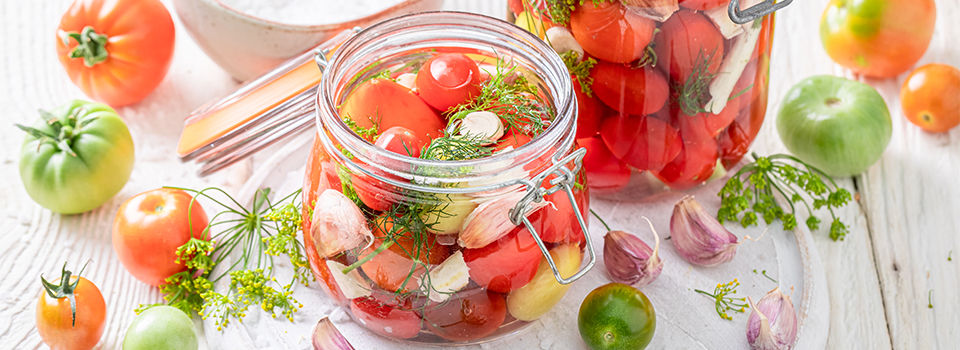
Why Can Your Fruits and Vegetables?
Canning uses pressure and heat to preserve fresh food inside a jar or other container. It kills harmful bacteria and seals in freshness. Because the food in your can or jar will be completely sterile, it won’t spoil until you open it. Once a can is open and is no longer airtight, airborne bacteria have access to your food. That’s why you have to “refrigerate contents after opening.”
Most fruits and vegetables are fairly easy to can, but some produce may require a different method of canning. For tips on how to can fruits and vegetables and how to best preserve what’s in your garden, go to the University of Georgia National Center for Home Food Preservation (NCHFP) website at http://www.uga.edu/nchfp/. The NCHFP website features detailed steps on preserving almost any kind of food.
The steps below outline basic guidelines for canning fruits and vegetables.
How to Can Fruit
Most recipes for canning fruit call for a simple syrup (a mixture of sugar and water), which preserves the fruit and its flavor. Depending on the type of fruit, you’ll either use a light or heavy syrup. Consult the NCHFP website for specific canning steps for specific fruits.
Step 1: Prepare Canning Containers and Fruit
Depending on how much produce you’re canning, you’ll need quite a few mason jars or similar containers in various sizes. Prepare your canning containers and gather the fruit you’re going to can. Wash the jars and lids in soap and hot water to sterilize them. A dishwasher is the preferable method for sterilization. Be sure that the jars are not cracked once they are removed from the dishwasher. Pick only the freshest fruit you have and wash it thoroughly in cold water. You may need to peel the fruit depending on the type being canned. Some fruits, such as peaches, can be “slipped.” This simply means that you slide the skin off of the fruit before canning. Dip these fruits briefly in boiling water until the skin splits open. Afterwards, place them in cool water. The skin will just slip off. Remember to remove any pits, cores or other parts you don’t want to eat. Use a cutting board to cut and prepare your fruit.
For each quart you’re canning, mix one cup of water with ¼ to ½ cup of sugar. The type of syrup you make depends on how sweet the fruit is and how “syrupy” you want your syrup to be.
Step 2: Fill and Seal
Fill the canning jars with fruit and use a wide-neck funnel to pour in your syrup. Use a knife to get rid of air bubbles at the bottom of the jars by scraping along the sides of the filled jars. Leave an inch of room at the tops for the contents to expand. Screw on the lids, making sure they’re secure but not too tight.
Helpful Tip
If the lids on your jars are too tight, air can’t escape and create the seal necessary to keep your food preserved and free of harmful bacteria.
Step 3: Start Canning
Make sure you follow the instructions provided with your pressure canner. Place your canned fruit inside the canner and make sure the water inside covers the containers halfway.
Lock the canner lid and turn up the heat, allowing the pressure to build inside the device. Be sure to follow the manufacturer’s instructions and monitor the pressure closely. Maintain the pressure for the directed amount of time, usually about 20 minutes. Regulate the pressure using the heat controls on your stove.
When finished, turn off the heat and let the canner cool down. Open the container after the pressure gauge has gone back down to zero. Remove the jars using a set of heavy-duty tongs or a jar lifter.
Safety Alert!
When removing the pressure canner’s lid, tilt it away from your face so the hot steam inside doesn’t cause injury.
Let the jars cool for about 24 hours. Then check to make sure the proper seals formed inside the jars by pushing down on the lid. If it pops back after you press it, the lid didn’t seal properly. Be sure to refrigerate the contents of the jars that didn’t seal and consume within a few days, or freeze them and save for later.
How to Can Vegetables
To can vegetables requires that you combine liquid with the produce when you can it, like you would with fruit. However, vegetable canning usually requires a brine mixture (water and salt). Not all recipes call for a brine mixture, and the amount of salt you use depends on the type of vegetable, so check the NCHFP website for details.
Step 1: Prepare Containers and Vegetables
As with fruit, you’ll need quite a few mason jars or similar containers. Wash all the jars and their lids with hot water and soap to sterilize them—preferably in a dishwasher. Be sure the jars aren’t cracked.
Gather the vegetables you’re planning to can. Be sure they’re as fresh as they can be. If your vegetables are coming straight from the garden, can them as soon as you’ve inspected, picked, peeled, cut and washed them. Use a cutting board to prepare your vegetables. Remove any stems or other parts you don’t want to eat. It’s at this time you’ll want to add any preservatives, if the particular canning recipe calls for it.
Step 2: Fill and Seal the Jars
Fill the jars with your vegetables. Use a wide-neck funnel to pour in the brine, leaving an inch of space at the tops. Use a knife to get rid of air bubbles at the bottom of the jars by scraping along the sides of the filled jars. Screw on the lids, making sure they’re tight and secure without over-tightening the lids. Air will continue to escape during the rest of the canning procedure.
Helpful Tip
If the lids on your jars are too tight, air can’t escape and create the seal necessary to keep your food preserved and free of harmful bacteria.
Step 3: Start Canning
Fill the pan inside a large (approximately 20 quarts) pressure canner with about 3” of water. Use a jar lifter or tongs to place your jars into the hot water inside the canner. Submerge the cans halfway underwater. Be sure to follow the canner manufacturer’s instructions, as preparation steps can vary.
Lock the canner lid securely. Turn up the heat to its highest position and allow steam to vent for approximately 10 minutes, then completely seal the canner and allow pressure to build inside.
Be sure you monitor the amount of pressure closely during the process. Let the pressure build to the appropriate level for canning as directed by the manufacturer. Once you’ve reached the required pressure, maintain that pressure for the amount of time directed, usually about 20 minutes. Regulate the pressure using the heat controls on your stove.
After 20 minutes, or the amount of time recommended by the manufacturer, turn off the heat and let the canner cool down. When the pressure gauge has gone down to zero, let the steam inside escape through the vent.
Safety Alert!
When removing the pressure canner’s lid, tilt it away from your face so the hot steam inside doesn’t cause injury.
After the canner has cooled, remove the jars using jar tongs and let them cool completely. This can take up to 24 hours. Once the jars have cooled, check to make sure the jars sealed properly. You’ll know the jar is sealed correctly if the lid is indented—if you press on it, the middle of the lid won’t depress and pop back. If any of your jars didn’t seal correctly, be sure to eat the vegetables from the non-sealed jars within a few days—treat the contents of the jar as you would fresh produce.
That’s it! Enjoy your garden’s harvest all year round.
Project Shopping List
Here’s what you’ll need to complete this project successfully.