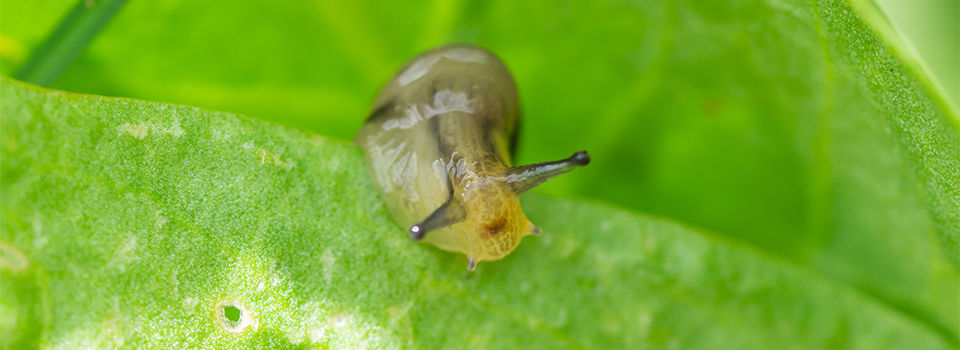
Slugs that live in your garden are there because you’ve helpfully supplied them with an abundant food source. But don’t blame yourself — learn how to control slugs and prevent them from damaging your crops by knowing how to spot the damage they cause, and what gets rid of them. Then you can take action knowing you have what you need to control slugs.
Step 1: Look for the Signs
Slugs usually come out at night and feast on low-hanging leaves, so they are often not noticed clinging to your crops and gorging. You have to look for evidence of their nocturnal attacks in the light of day. It can be difficult sometimes to determine the culprit of your plant damage if you can’t see the offenders in action. Knowing what types of plants attract slugs can help — they prefer to feast on lettuce, peas and strawberries in vegetable gardens and tulips and hostas in flower gardens, among others. Then look for telltale signs such as large holes on plant leaves and visible slime trails on leaves and any adjacent stones or nearby structures.
Slugs prefer to hide out in wet, damp areas of your garden, particularly any areas that get little to no sunlight. They hide during the day under leaves, stones, boards and bricks close to or in the garden itself. Keep your gardens clear of things they can hide under as much as possible to help cut down on their escapades.
Step 2: Use Snail-control Products
There are a number of effective slug control products available. Use a product such as Bonide® Slug Magic bait pellets. The bait is ingested by slugs when they travel from their hiding places to plants. The bait causes them to stop feeding, eventually making them less mobile, until they die within three to six days.
Scatter Slug Magic bait on the lawn or on the soil around any plants: vegetables, flowers, fruit trees or bushes. For large areas, use a broadcast spreader. Read package instructions for the correct way to use the bait in a spreader. Make sure that the bait doesn’t pile up and apply only when the ground is damp. You can add water from a garden hose to the area before applying the bait.
Apply the bait during the evening, as slugs travel and feed mostly at night or early morning.
Step 3: Hand Picking
One of the best and oldest ways of controlling slugs in your garden is picking them off by hand. The best picking occurs in the early morning or evening. Simply pluck them off of plants (wear gloves if you want) and drop them in a bucket of soapy water or salt.
Step 4: Set a Beer Trap
Slugs are attracted to the fermented yeast in beer, many gardeners have discovered. Bury a small cup to soil level in your garden and then fill it about halfway with beer. The slugs will be drawn to the cup and fall in and drown. Check it every day or while tending to your garden. You can then empty the cup and reset the trap.
Step 5: Apply Diatomaceous Earth (DE)
Diatomaceous earth, or diatomite, is a powder created from the fossilized remains of diatoms, a type of hard-shelled algae, and is mostly silica. When a slug travels through a garden covered with DE, the powder cuts their undersides and causes them to become dehydrated and eventually die.
Helpful Tip
Diatomaceous earth should be applied only when it’s dry outside. Excessive moisture can reduce its efficacy.
Safety Alert!
Wear a dust mask when applying DE.
Step 6: Salt Them
If you notice slugs on walkways, patios and other surfaces on the way to your garden, salt them. Sprinkle a bit of table salt on each slug and they will become desiccated and die within a few hours. Or, you can make a saltwater solution in a spray bottle and spray them with it. Be sure that your salt-to-water ratio is high on the salt side.
Helpful Tip
Be careful when using excessive amounts of salt around your garden plants. Too much salt absorbed into the soil can disrupt the soil pH and potentially kill vegetation.
Great job! Your garden’s slug attackers should be on the retreat. Enjoy your healthy, slug-free garden!