Step 2: Select a Site
Roses need their own space without competition from trees, shrubs or other permanent plants. Choose a well-drained location that gets six to eight hours of sun daily. A southern exposure that receives morning sun and afternoon shade is ideal. The site also should have good air circulation and provide some winter wind protection. Be sure you will have enough room for adequate spacing between plants. Hybrid teas require 3′ to 5′ between plants. Grandifloras need 2′ to 4′; Floribundas need 2′ to 3′; shrub roses require 4′ to 8′; Patio trees need 2′ to 3′ and miniatures need 6″ to 12″.
Step 3: Prepare the Soil
Consult an expert at your local True Value hardware store store for advice about the soil pH needs for the specific type of rose you wish to plant. Generally, roses prefer a soil pH range of 5.5 to 7.0. Use a soil pH testing kit to determine how acidic or basic your soil is. If needed, add rose fertilizer to the soil, following the fertilizer instructions carefully. Then retest the soil to check that the new pH level is suitable.
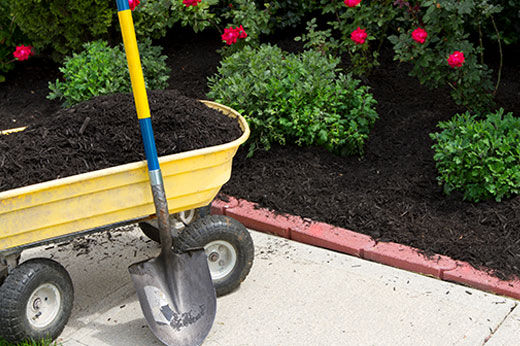
When starting, prepare by removing soil from an area 18″ to 24″ wide and 24″ deep for each rose plant, using a small shovel or spade. Add compost or peat moss to the soil you’ve removed. Add a little bit of sand if the soil is extremely moist.
Step 4: Plant
Roses are available as container-grown or bare-root plants. Although most are properly pruned and ready for planting, you may need to prune their tops, leaving 8″ to 12″. Remove any dead or damaged wood and examine the roots carefully after the plant is placed in the hole. Trim back dead or broken roots with a hand pruner. If necessary, clip root tips back about ½” to 1″ to promote rapid growth. Use topsoil to form a cone in the bottom of the hole where the rose bush is to be planted. Set the rose bush into the hole. Spread the rose roots evenly over the cone of soil. Make sure the hole is large enough to provide adequate room for all rose roots. Most healthy rose bushes have three strong shoots coming up from the root system. Cover the knot just below these three shoots to a depth of 1″. Pack the soil firmly around the roots. Fill the hole with water and allow it to soak in. Then refill the hole with water again. After planting, build a protective mound of earth around stems to prevent damage from cold and wind.
Helpful Tips
When planting in groups or large masses, use an odd number of plants such as 3, 5 or 7. If planting in rows, stagger bushes to give a softer effect.
After planting, prune hybrid tea roses back to lengths of about 6″ to 8″. Trim floribundas to lengths of approximately 4″ to 6″.
Apply organic fertilizer and water when the rose bushes have been planted. Apply again in two weeks. This will increase root hairs and reduce transplant shock. Once growth begins, remove the protective mound around plants and feed them monthly with either an organic fertilizer, such as composted manure, or a general-purpose rose food.
After the first feeding, apply a 3″ to 6″ layer of organic mulch. This will help retain moisture, moderate soil temperature, prevent weeds and add organic matter to the soil. As winter approaches, add more mulch, mounding some around the base of the plant to protect the bud union.
Newly planted roses must be watered frequently during their first three to four weeks. Water whenever the top 2″ of soil is dry. Once established, soak the planting area every seven to 10 days during dry spells. Keep water off the leaves by using a bubbler or soaker system, and always water in the morning, as watering at night creates moist conditions that promote the spread of disease.
Step 5: Maintain Your Roses
Watering is the most important factor in growing bright, large, long-lasting buds. Like any other garden, roses need about 1″ of water per week. A single, deep watering will promote root growth and make your rose bush stronger. If it is very hot or windy, or if your soil has a sandy texture, you might need to water a little more than 1″ per week.
It is important to feed your roses three times a year with prepared rose food or a fertilizer with a 5:10:5 (Nitrogen: Phosphorus: Potassium) ratio. It is best to feed your roses just after pruning, after the first bloom and two months before the first frost. Don’t feed newly planted roses until a substantial amount of growth is evident.
Remember to mulch. It enriches the soil as it decomposes and gives your flowerbed a better appearance.
Helpful Tips
If you live in an area where temperatures drop below freezing, ask a True Value hardware store expert what type of protection is recommended for roses in your climate.
For the best results, roses should be pruned with pruning shrears in late winter or early spring . A well-pruned rose bush will result in a healthy and well-shaped plant.
Weeds take water and nutrients from your roses, and are a breeding ground for insects and disease. Use a pre-emergent herbicide in spring to kill weeds, and a rose spray or dust to keep the pests away.
Great work! Your rose garden is on its way to becoming a beautiful addition to your outdoors.
Project Shopping List
Here’s what you’ll need to complete this project successfully.