
Why Try Vertical Gardening?
So what are the benefits of vertical vegetable gardens? Here are some of the reasons why vertical gardening is an excellent, if non-traditional approach to growing your own produce.
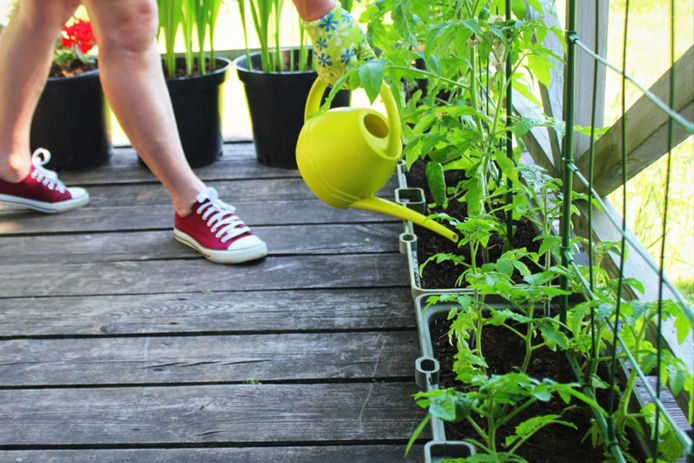
- Convenience – Maintaining a successful garden plot can be a labor-intensive and time-consuming endeavor, depending on the size of your plot and what you are growing. Vertical gardening requires less soil, watering and weeding. Because your plants are elevated and growing vertically, many are at eye level; making them easier to tend without much bending at the knees or back.
- Saves Space – You don’t need to parcel off a sizable piece of your property to grow vegetables with a vertical garden. Your garden can be grown almost anywhere, whether it’s in your yard, on your patio or balcony, even along a fence. Whether you live in a rural, urban or suburban location, vertical gardens are a great way to grow produce and maximize space.
- Healthy Plants and Produce – Vertical gardens can often increase your yield. Planting vertically can improve air circulation and exposure to sunlight; providing ideal growing conditions. The plants should benefit from this better air circulation, and thus lessen pest, disease, and environmental issues.
What Vegetables Grow Well in a Vertical Garden?
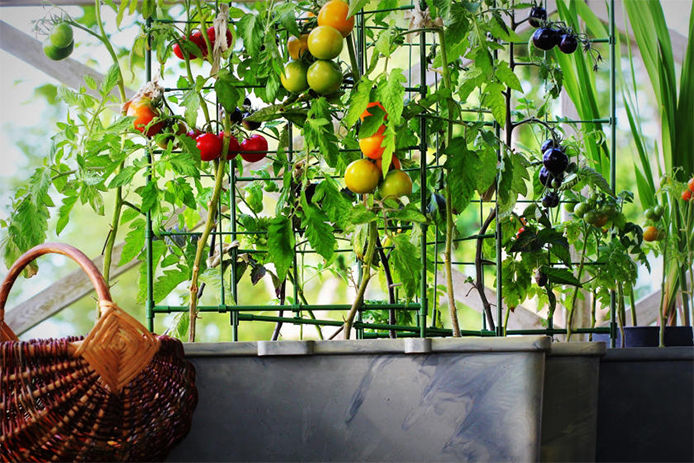
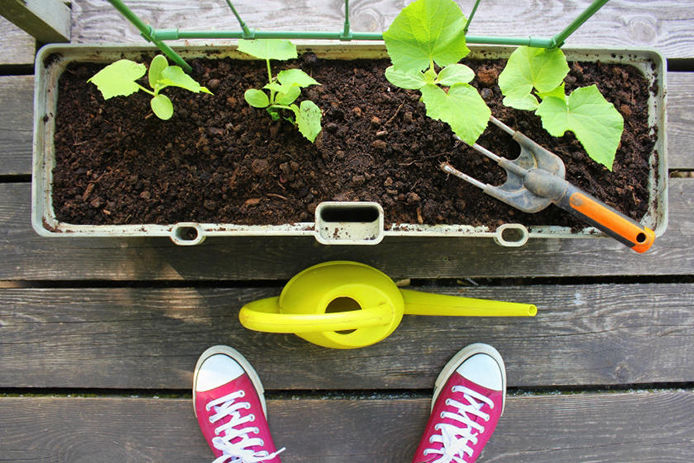
There are a number of vegetables that can thrive in a vertical garden. Some require “training” to grow vertically on a support structure such as a trellis, while others can be grown in pots or planters on shelves or in hanging baskets. A combination of climbing plants and container plants is a great approach to a well-rounded vertical garden.
Climbing plants include:
- Beans
- Cucumber
- Squash
- Peas
- Melons
Other plants that do well in containers arranged vertically include:
- Lettuces
- Onions
- Eggplant
- Peppers
- Potatoes
- Herbs
- Tomatoes